

Construction begins on 230 new apartment homes as part of the One Westside revitalization effort.
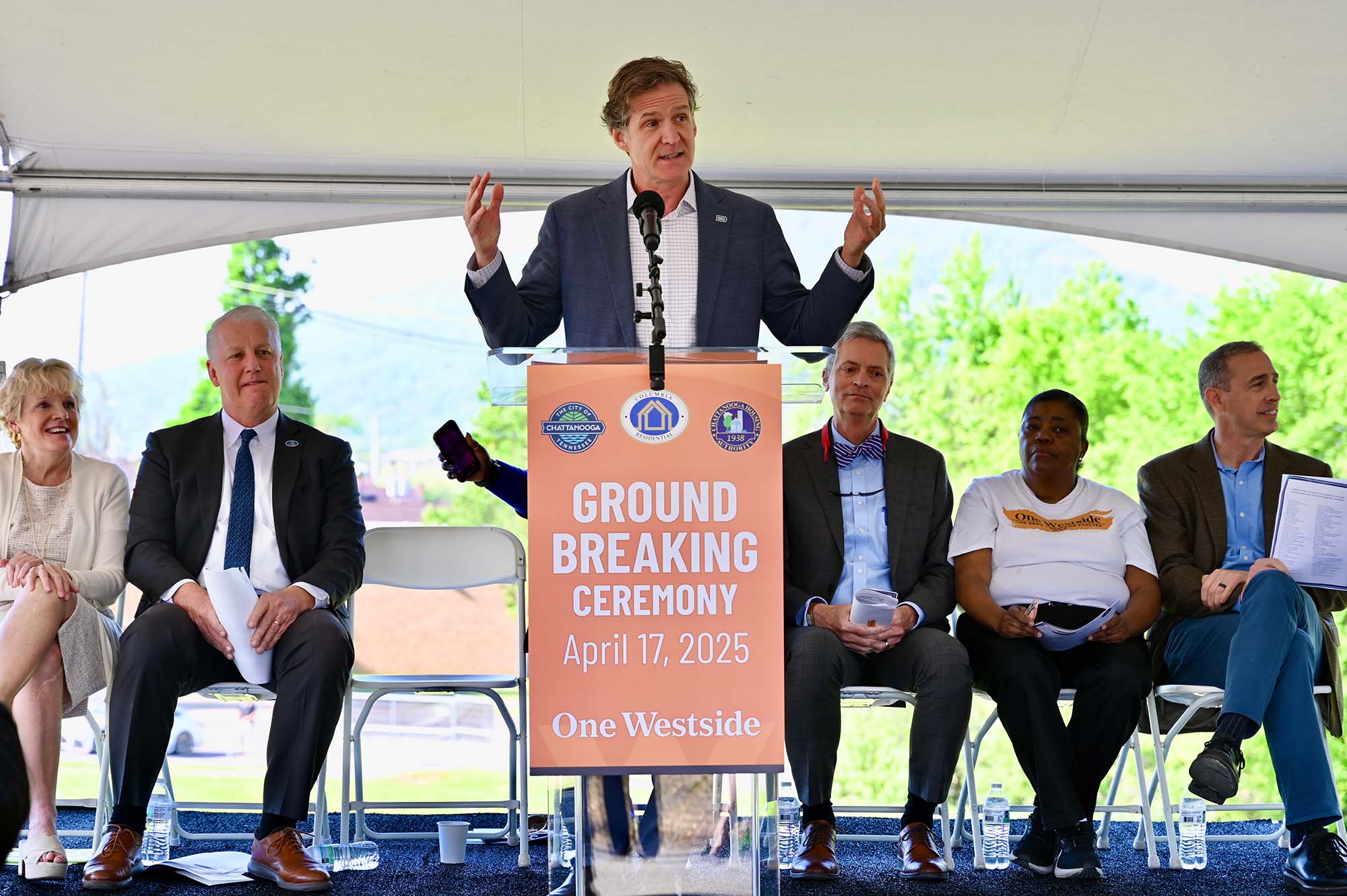
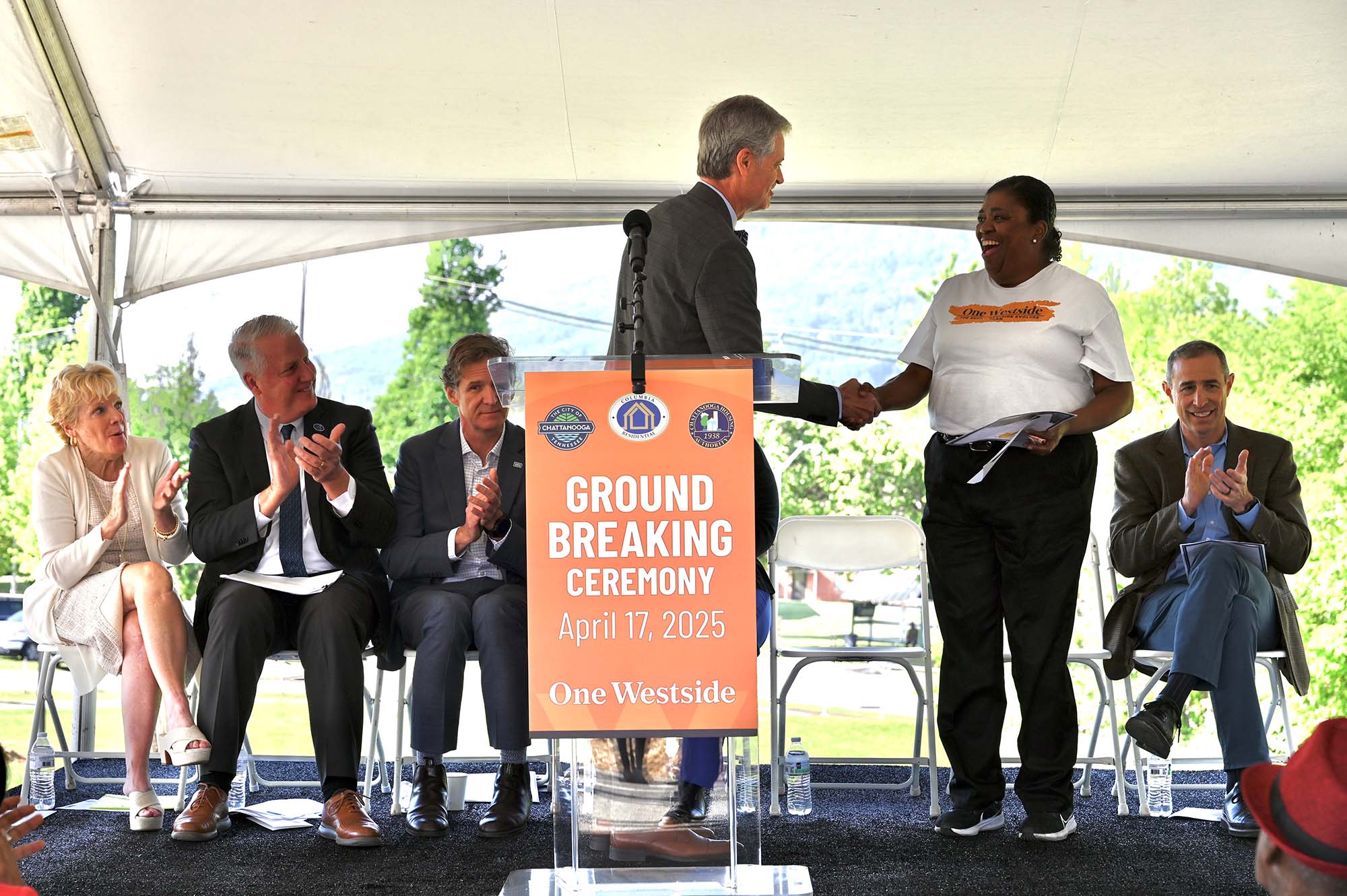
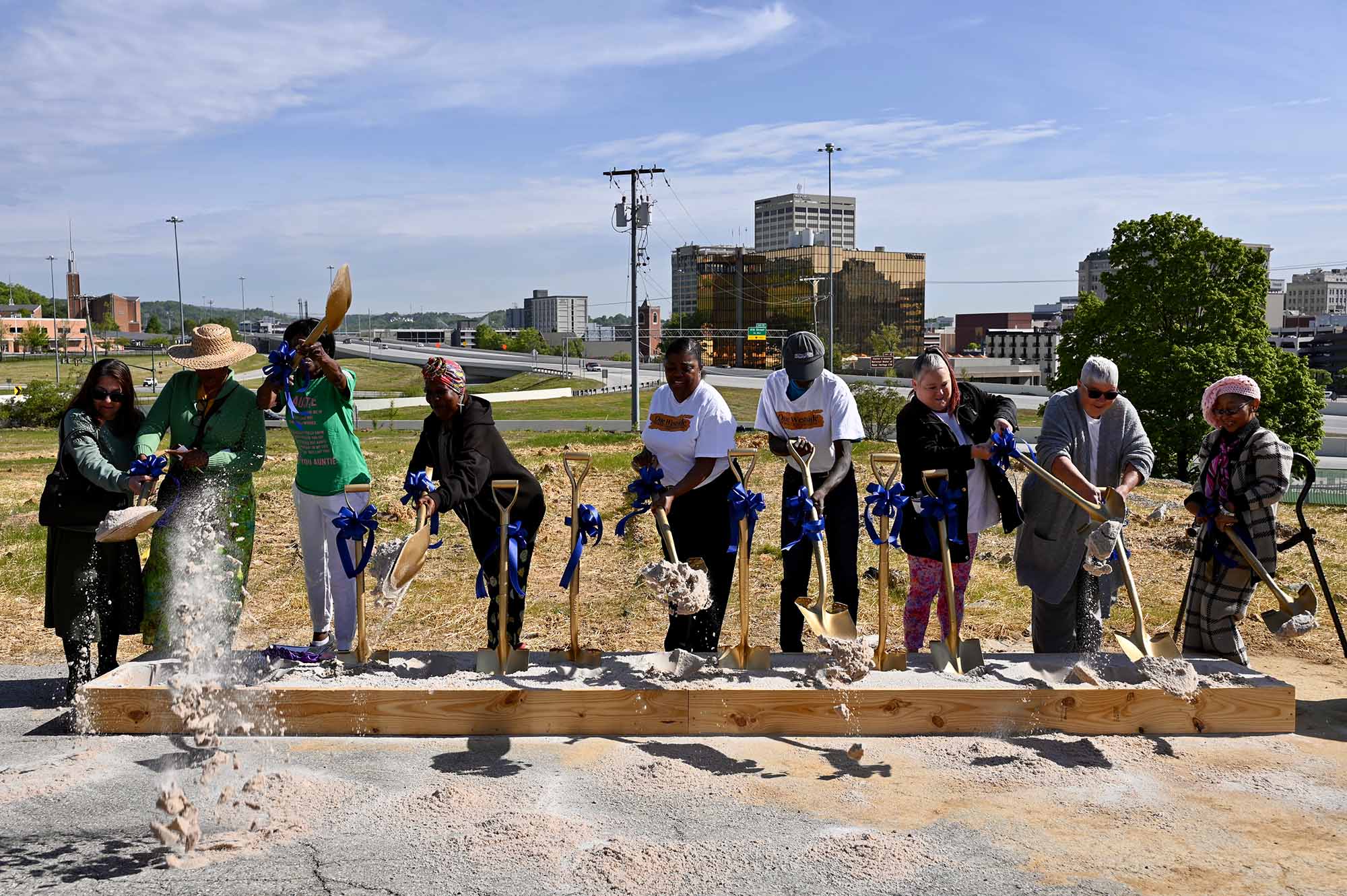
A long-anticipated transformation is underway in Chattanooga’s College Hill community. Residents, city officials, and project partners gathered on April 17 for a groundbreaking ceremony on the first phase of One Westside, a mixed-use, mixed-income redevelopment effort led by the Chattanooga Housing Authority, in collaboration with the City of Chattanooga, the U.S. Department of Housing and Urban Development, and Columbia Residential.
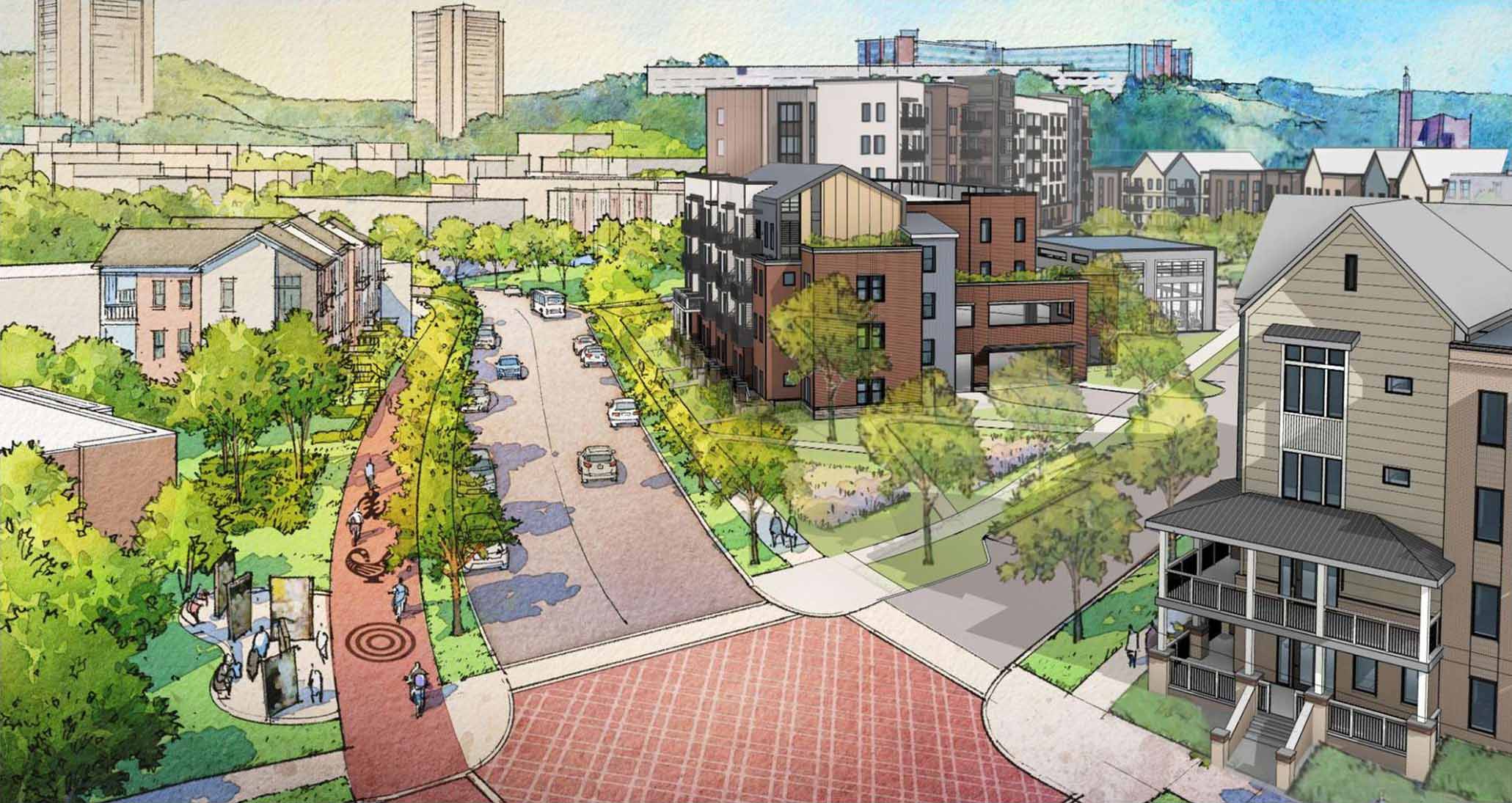
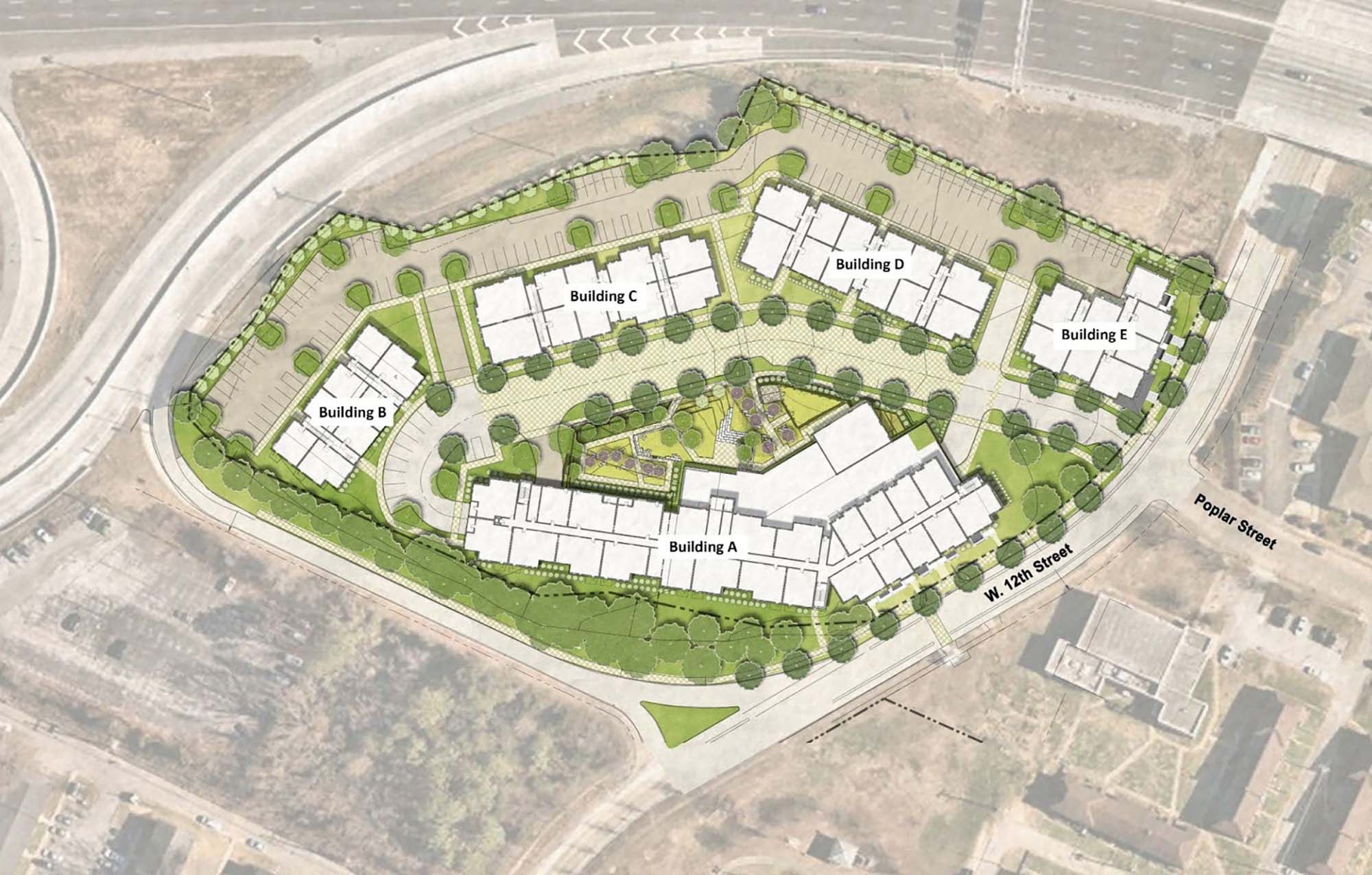
The groundbreaking, held at the site of the now-demolished Youth and Family Development Center on West 12th Street, marks the start of construction on 230 new apartment homes. Once complete in late 2026, this $89 million development will include a mix of one-, two-, and three-bedroom units. Ninety-two of the apartments will be reserved for current College Hill Courts residents, while the remaining 138 will be offered at varying levels of affordability, including homes priced for households at 60% and 80% of the Area Median Income (AMI), as well as market rate units.
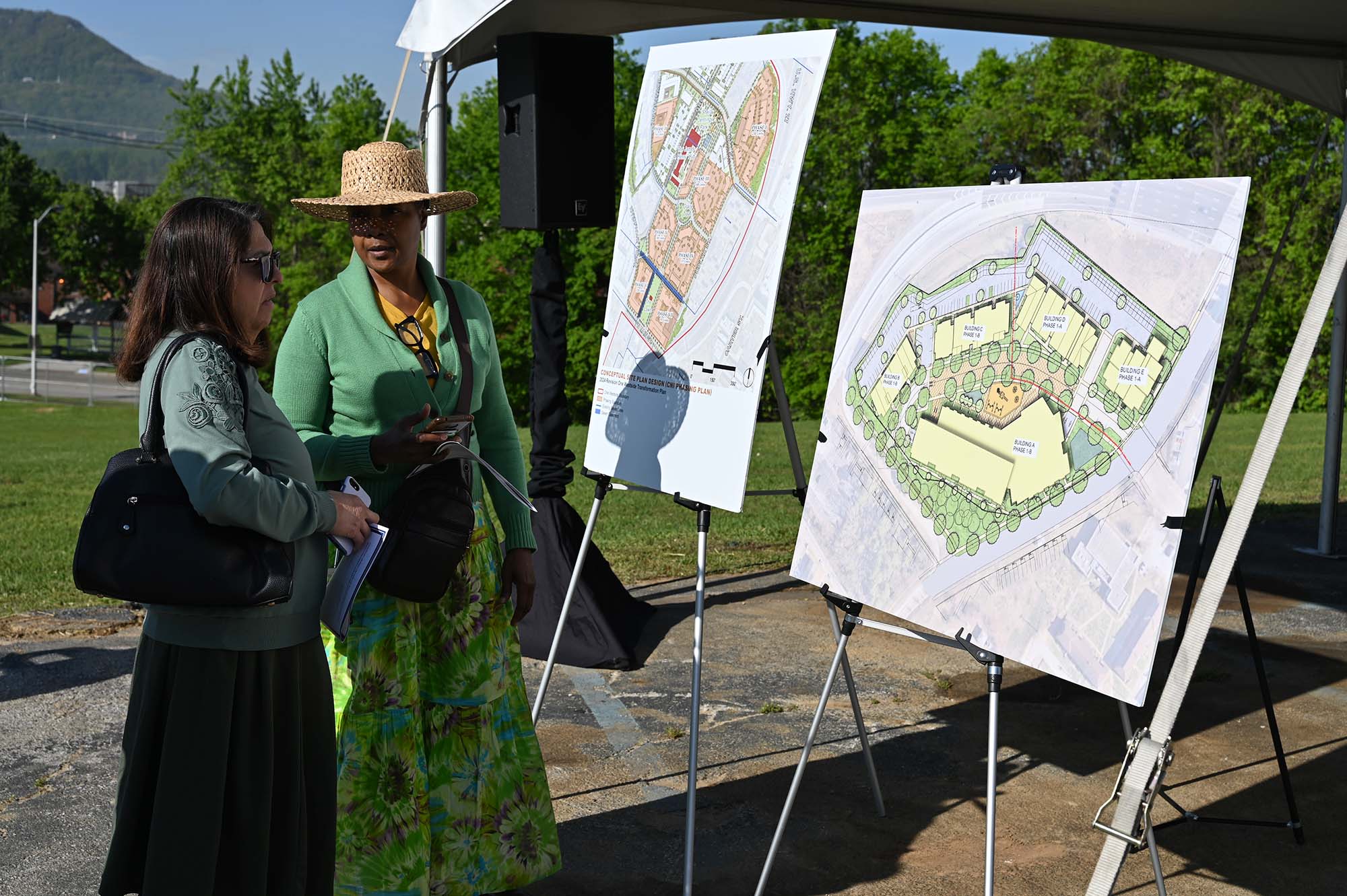
The groundbreaking event also marked the financial close of Phase I, the first of seven planned phases that will ultimately replace all 629 aging units at College Hill Courts and Gateway Towers. In total, the plan includes 1,126 new homes across the Westside by 2032.
Originally constructed in 1940, College Hill Courts is Chattanooga’s oldest public housing development. It has long served as a cornerstone of the Westside community, home to generations of families and a testament to both the resilience and challenges of public housing in the city. One Westside’s master plan, shaped over several years with direct resident input, honors that legacy while looking ahead to a stronger, more connected future.
At the groundbreaking, Chattanooga Mayor Tim Kelly praised the community-led process, calling One Westside “a great day in Chattanooga’s history.”
“There is no project that better encapsulates the goals and values of One Chattanooga than One Westside. It could not have happened without the input, support, and belief of the current residents of the Westside.”
The city has committed more than $100 million in public and in-kind investment toward the project’s success, including $9 million in direct capital support for Phase I.
Columbia Residential, the project’s master housing developer, has worked across the Southeast for more than 30 years building and managing affordable and mixed-income housing. Their team will manage the new Westside properties as construction progresses.
Phase I is also supported by a $39.8 million equity investment from Truist Bank, along with $50 million in construction and bridge financing. Truist’s Mark Stewart said the bank sees the investment as part of its mission to help build stronger communities.
As the first housing goes up, work continues across the neighborhood. The Chattanooga Housing Authority is using a “build-first” strategy, an approach that ensures new homes are available before older ones are taken offline. The goal is to prevent resident displacement while creating more options for future generations.
Alongside the new apartments, work is underway to transform the historic James A. Henry School into a multi-use neighborhood hub. The first phase of renovations includes 117 new Head Start seats for early childhood education. Future phases will add a health clinic, gym, community space, and improvements to nearby Sheila Jennings Park.
Councilwoman Raquetta Dotley, who represents the Westside, credited residents for staying engaged and helping shape the development at the groundbreaking ceremony.
“This isn’t just about buildings—it’s about trust, partnership, and people,” she said. “The follow-through matters because it shows accountability to the promises that were made.”
One Westside isn’t simply a new development—it’s a new chapter for a neighborhood with deep roots, a strong spirit, and a shared vision for the future.

One Westside made strong progress on Critical Community Improvements, including finishing touches on the James A. Henry Hub, planning the Creative Cultural Innovation Incubator, enhancing green spaces, and advancing public art projects like the underpass lighting and mural.

The Housing Plan is advancing at College Hill Courts, with new housing, improved streets, and community amenities. Phases 1 and 2 are underway, connecting residents to jobs and services, while planning for Phase 3 focuses on future infrastructure.